

Self-leveling concrete can solve several common flooring problems, including uneven surfaces, low spots, damaged substrates, and floors that are not ready for a new finish. It creates a flatter, smoother surface that can improve both the appearance and performance of the finished floor.
For Orange County property owners, self-leveling concrete is especially useful during renovations, flooring replacements, and projects where an existing concrete surface needs to be corrected before another flooring system is installed.
What Is Self-Leveling Concrete?
Self-leveling concrete is a cement-based material designed to flow across a prepared surface and fill low areas with less manual finishing than traditional concrete.
It is commonly applied over existing concrete to create a more uniform substrate. Depending on the product and project, it may be used as an underlayment beneath another flooring material or as part of a finished concrete flooring system.
Property owners considering this type of flooring work can learn more about our self-leveling concrete services in Orange County.
Creates a Flatter, More Consistent Surface
One of the biggest benefits of self-leveling concrete is its ability to correct variations in an existing floor.
Older concrete can develop dips, uneven areas, rough sections, and other imperfections over time. These problems may become more noticeable when installing tile, vinyl, engineered flooring, polished concrete, or other finishes.
A properly installed self-leveling material can help create a more consistent surface before the final flooring system is applied.
Helps Prepare Floors for New Flooring
Many finished flooring products perform best when installed over a relatively flat and stable substrate.
Uneven concrete can cause problems such as:
- Gaps beneath flooring
- Uneven transitions between rooms
- Poor adhesion
- Visible imperfections
- Premature wear
- Cracking in certain flooring materials
Using self-leveling concrete as part of the preparation process can provide a better foundation for the flooring installed above it.
Useful for Residential Renovations
Self-leveling concrete is often used when renovating older homes or replacing existing flooring.
Removing carpet, tile, laminate, or another floor covering can expose concrete that is less even than expected. Rather than replacing the entire slab, contractors may be able to correct certain surface problems using a self-leveling system.
This makes it particularly useful for remodeling projects where the underlying concrete needs improvement before the next flooring material can be installed.
Works Well in Commercial Properties
Commercial spaces often require flooring that can handle frequent use while maintaining a clean, professional appearance.
Self-leveling concrete can be used during renovations in:
- Retail stores
- Offices
- Restaurants
- Warehouses
- Showrooms
- Medical facilities
- Industrial spaces
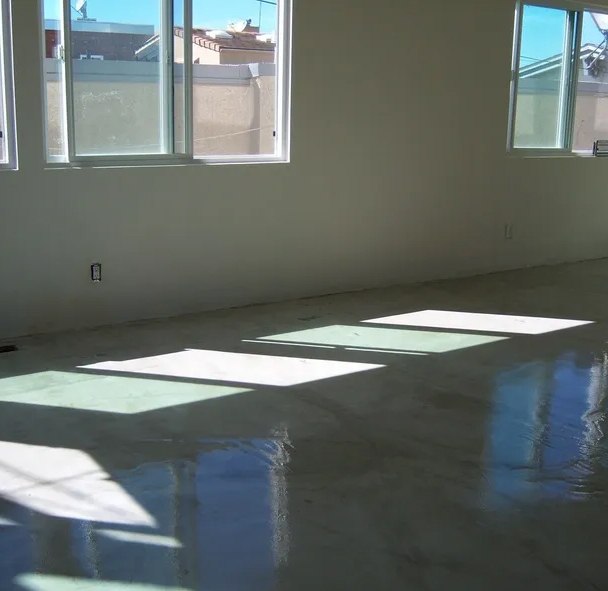
Creating a smoother substrate can also help prepare the floor for decorative finishes. Property owners looking for a more distinctive finished surface may also want to explore stained and polished concrete options.
Installation Can Be Faster Than Traditional Floor Leveling
Traditional methods of correcting an uneven concrete surface can involve extensive grinding, patching, forming, or manual finishing.
Self-leveling products are designed to flow across the floor and fill variations more efficiently. This can reduce the amount of manual finishing required, depending on the condition of the existing substrate.
Faster installation can be particularly valuable for businesses that want to reduce downtime during a flooring renovation.
Provides a Strong Base for Long-Term Flooring Performance
A finished floor is only as reliable as the surface underneath it.
Correcting uneven areas before installing another flooring product can reduce stress on the finished surface and help prevent avoidable flooring problems.
The durability of the finished system will depend on several factors, including the condition of the existing concrete, surface preparation, installation method, moisture levels, and the type of flooring installed over it.
Surface Preparation Is Critical
Self-leveling concrete should not simply be poured over an existing floor without preparation.
The substrate typically needs to be inspected and cleaned so contaminants such as dirt, dust, grease, coatings, or loose concrete do not interfere with adhesion.
Cracks, damaged areas, and other substrate problems may also need to be repaired before the leveling material is installed.
Proper preparation is one of the most important factors in achieving a durable result.
Moisture Problems Should Be Addressed First
Moisture coming through a concrete slab can affect flooring materials, coatings, adhesives, and self-leveling products.
Before installation, the concrete may need to be evaluated for excessive moisture or other conditions that could interfere with bonding and curing.
Ignoring an underlying moisture issue can increase the risk of problems such as:
- Delamination
- Cracking
- Adhesion failure
- Flooring damage
- Surface deterioration
Correcting the source of the problem before installing the new flooring system can help prevent more expensive repairs later.
Self-Leveling Concrete Is Not Right for Every Floor
Although the name suggests the material automatically corrects every flooring problem, self-leveling concrete still requires proper planning and installation.
Severely damaged slabs, major structural movement, significant cracking, drainage problems, or large elevation changes may require additional repair work.
A flooring professional can evaluate the existing concrete and determine whether self-leveling material, grinding, repair, resurfacing, or another approach is the better option.
Professional Installation Can Improve the Final Result
Self-leveling materials can begin setting relatively quickly, which means mixing, pouring, spreading, and finishing must be carefully coordinated.
Large residential, commercial, and industrial projects usually require specialized preparation equipment and experienced installers.
Professional installation also helps ensure that the correct product, thickness, preparation method, and moisture considerations are addressed before the material is applied.
If you are dealing with uneven or damaged concrete and want to determine the best way to prepare your floor, contact Concrete Solutions to discuss your project.
