

Concrete is known for durability, but even a well-built concrete floor can develop cracks, surface damage, uneven areas, worn joints, or other problems over time.
For Orange County homes, warehouses, garages, retail spaces, offices, and industrial properties, addressing concrete damage early can help prevent smaller problems from interfering with the safety, appearance, and usability of the floor.
The right repair method depends on what caused the damage, how extensive it is, and how the floor will be used afterward.
What Causes Concrete Floors to Become Damaged?
Concrete floor damage can develop for many reasons. Understanding the cause is important because simply covering a crack or damaged area may not solve the underlying problem.
Common causes include:
- Concrete shrinkage
- Heavy loads
- Building movement or settlement
- Impact from equipment
- Moisture
- Improper installation
- Surface wear
- Chemical exposure
- Damaged control or expansion joints
- Previous coatings or flooring systems
- Poor surface preparation
A professional inspection can help determine whether a problem is primarily cosmetic, limited to the surface, or related to conditions that require more extensive evaluation.
Common Signs a Concrete Floor Needs Repair
Cracks
Cracks are one of the most common concrete floor problems.
Some cracks develop as concrete cures and shrinks, while others may result from movement, settlement, heavy loading, or other conditions.
The width, depth, location, and movement of a crack all matter when deciding how it should be treated.
Repairing a crack without understanding why it formed can lead to the same area becoming visible again later.
Spalling
Spalling occurs when sections of the concrete surface begin to chip, flake, or break away.
It can range from relatively minor surface deterioration to more substantial damage.
Depending on the cause and depth, the repair may involve removing weak material and rebuilding or resurfacing the damaged section.
Pitting
Pitting creates small holes or depressions in the surface.
A heavily pitted concrete floor can become difficult to clean and may be unsuitable for polishing or other finished flooring systems until the damaged areas are addressed.
Uneven Concrete
Uneven areas can interfere with flooring installation, equipment movement, doors, furniture, and normal use of the space.
The appropriate solution depends on why the floor is uneven.
Grinding may correct some high spots, while low areas or broader elevation problems may require a different approach.
For floors being prepared for another flooring material, self-leveling concrete may be appropriate in certain situations.
Damaged Joints
Concrete floors are intentionally divided by joints that help accommodate movement.
Over time, joint edges can deteriorate, chip, widen, or become damaged by equipment and traffic.
Commercial warehouses and industrial facilities may experience particularly heavy joint wear because carts, forklifts, and other equipment repeatedly cross the same areas.
Stains and Surface Discoloration
Oil, chemicals, water, old coatings, adhesives, and other contaminants can change the appearance of concrete.
Not every stain requires structural repair, but contamination may need to be addressed before polishing, staining, coating, or refinishing the floor.
Why Repair Concrete Before Refinishing It?
Surface preparation is one of the most important parts of any finished concrete flooring project.
Cracks, pits, damaged joints, loose material, and deteriorated areas can affect the appearance and performance of the final floor.
If the goal is polished concrete flooring, existing damage should be evaluated before grinding and polishing begins.
The same applies when installing decorative stained polished concrete. Repairs can sometimes absorb stains differently than the original concrete, so property owners should understand how repaired areas may affect the finished appearance.
How Are Concrete Floors Repaired?
There is no single concrete repair method that works for every problem.
The appropriate technique depends on the type of damage and the intended use of the floor.
Crack Repair
Concrete cracks may be cleaned and filled or treated with a repair material selected for the specific situation.
The contractor should consider:
- Crack width
- Crack depth
- Whether the crack is active or stable
- Expected traffic
- Floor use
- Future flooring or polishing plans
A repair material appropriate for a warehouse floor may be different from what is needed for a decorative residential floor.
Concrete Patching
Damaged or missing sections of concrete can sometimes be rebuilt using patching or repair materials.
Weak or loose concrete should generally be removed before the repair material is installed.
Proper preparation helps the repair bond to the surrounding floor.
Grinding
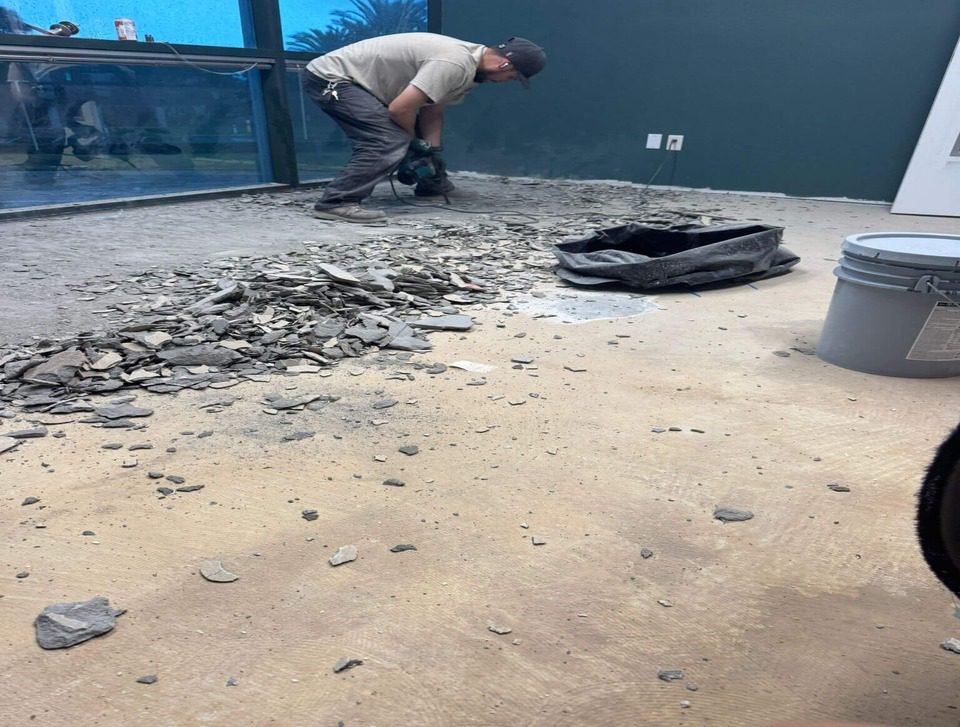
Concrete grinding can help correct certain surface irregularities, remove coatings, eliminate high spots, and prepare the floor for additional work.
Grinding is not a solution for every uneven floor. Significant settlement or structural movement should be properly evaluated rather than simply ground flat.
Resurfacing
When deterioration affects a broader area, resurfacing may be considered instead of repairing dozens of isolated spots.
The existing slab must still be suitable for the chosen resurfacing system.
Joint Repair
Damaged joints may require cleaning, rebuilding damaged edges, and installing an appropriate joint material.
The goal is usually to restore the area without preventing the joint from performing its intended function.
Surface Preparation for Polishing
When a repaired floor will eventually be polished, the repair process should take the final appearance into account.
Concrete repairs may remain visible after polishing. In many cases, this is normal.
Experienced concrete flooring contractors can help determine whether repairs should blend into the existing floor or intentionally become part of its finished character.
Can Cracked Concrete Be Polished?
Often, yes.
A floor does not necessarily need to be completely free of cracks before it can become polished concrete.
The important question is what caused the cracks and whether they are stable.
Some cracks can be repaired before polishing. Others may remain visible as part of the natural appearance of the slab.
Concrete polishing itself does not structurally repair cracks.
If movement is continuing, additional investigation may be necessary before refinishing the floor.
Should You Repair or Replace a Concrete Floor?
Many damaged concrete floors do not need complete replacement.
Repair may be appropriate when:
- Damage is concentrated in specific areas
- Most of the slab remains sound
- Cracks can be appropriately treated
- Surface deterioration can be removed
- The floor can be successfully prepared for its future use
More extensive work may be necessary when the slab has severe deterioration, widespread movement, major settlement, or other significant problems.
A contractor should evaluate the existing floor before recommending repair, resurfacing, polishing, or replacement.
Why Early Concrete Floor Repair Can Matter
Concrete problems rarely become easier to correct because they were ignored.
For example, damaged joint edges can continue deteriorating under equipment traffic. Loose or deteriorated surface material can spread. Uneven areas may create operational or safety concerns.
Early evaluation gives property owners more options.
It can also help determine whether the damage is simply normal wear or evidence of another issue that should be addressed.
Concrete Floor Repair for Commercial Properties
Commercial and industrial floors often experience different demands than residential concrete.
Warehouses, manufacturing facilities, garages, retail properties, and other businesses may expose floors to:
- Forklift traffic
- Heavy machinery
- Pallet movement
- Frequent foot traffic
- Chemical exposure
- Oil
- Impact
- Abrasion
- Repeated joint crossings
Repairs in these environments need to account for how quickly the area must return to service and how much traffic it will receive afterward.
Concrete Solutions provides concrete flooring services throughout Orange County for residential, commercial, warehouse, and industrial properties.
Concrete Floor Repair for Homes and Garages
Residential floors can also develop cracks, pits, stains, worn surfaces, and uneven areas.
Common projects include:
- Garage floor repairs
- Interior concrete floor preparation
- Repair before polishing
- Repair before staining
- Surface preparation for new flooring
- Crack and damaged area repair
Homeowners planning a decorative finish should discuss repairs before choosing a color or polishing level because repaired sections may remain visible.
How to Choose a Concrete Floor Repair Contractor in Orange County
Ask What Caused the Damage
A good contractor should evaluate the condition of the floor rather than simply proposing a filler or coating for every problem.
Understanding why the concrete failed helps determine which repair approach makes sense.
Ask How the Floor Will Be Prepared
Preparation can be just as important as the repair material itself.
The contractor should explain whether damaged material, coatings, contamination, or loose concrete needs to be removed first.
Explain What You Plan to Do With the Floor Afterwards
Tell the contractor whether you eventually plan to:
- Polish the concrete
- Stain it
- Install another flooring material
- Apply a coating
- Continue using it as an industrial floor
The future use can influence how the repair should be performed.
Review Similar Projects
Ask to see examples of previous work involving similar types of damage and properties.
Experience with polished and decorative concrete is especially important if appearance matters after the repair is complete.
Compare the Scope, Not Just the Price
Two concrete repair estimates may include very different preparation and repair procedures.
Make sure the proposal explains what is being repaired, how the surface will be prepared, and what work is included.
Frequently Asked Questions About Concrete Floor Repair
Can All Concrete Cracks Be Repaired?
Many cracks can be treated, but the appropriate method depends on why the crack formed and whether movement is still occurring.
Will a Concrete Repair Be Invisible?
Not always. Concrete varies naturally, and repaired areas may have a different texture or color than the surrounding slab, particularly after polishing or staining.
Can You Polish Concrete After Repairing It?
Often, yes. Repairs are frequently completed as part of the preparation process before polishing. The contractor should choose repair materials with the planned finished floor in mind.
Can Grinding Fix an Uneven Concrete Floor?
Grinding can correct certain high spots and surface irregularities. More significant elevation differences may require other solutions.
Is Concrete Floor Repair Better Than Replacement?
Repair can be more practical when most of the existing slab remains in good condition. Severely deteriorated or unstable concrete may require more extensive work.
When Should a Concrete Floor Be Inspected?
Consider having the floor evaluated when cracks are growing, sections are breaking apart, joints are deteriorating, the floor has become uneven, or damage is interfering with normal use.
Get Your Concrete Floor Evaluated
The most effective concrete repair starts by identifying the actual condition of the slab.
Concrete Solutions provides professional concrete floor repair in Orange County along with grinding, polishing, staining, leveling, and other concrete flooring services.
If your residential, commercial, warehouse, garage, or industrial concrete floor has cracks, pitting, spalling, uneven areas, or other damage, contact Concrete Solutions to request an evaluation and estimate.
