

Polished concrete is a practical flooring option for many homes, garages, retail spaces, offices, warehouses, showrooms, restaurants, and industrial properties in Santa Ana.
Instead of installing another flooring material over the concrete slab, the existing surface is mechanically ground, honed, and polished to create the finished floor.
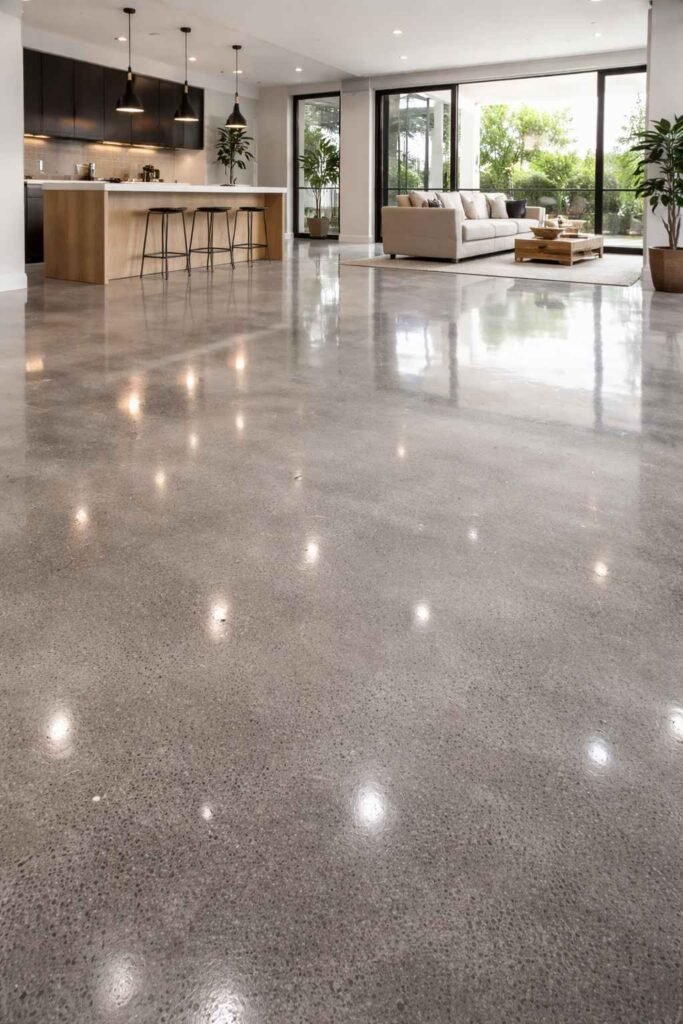
The result can range from a subtle matte surface to a highly reflective finish, depending on the condition of the concrete and the look you want.
Property owners considering a local project can learn more about polished concrete services in Santa Ana and the flooring options available for residential and commercial spaces.
What Is Polished Concrete?
Polished concrete is created using industrial grinding equipment fitted with progressively finer diamond abrasives.
The process refines the existing concrete surface rather than simply applying a glossy coating over it.
Depending on the project, installation may include:
- Removing old coatings or adhesives
- Repairing cracks and damaged concrete
- Grinding the slab
- Applying a concrete densifier
- Honing the surface
- Polishing to the desired sheen
- Applying stain or decorative treatments
- Adding an appropriate protective treatment when needed
For a closer look at the complete process, see our polished concrete flooring services.
What Are the Benefits of Polished Concrete?
Durability
Concrete is naturally well suited to high-traffic environments.
A properly prepared polished floor can work well in spaces exposed to:
- Foot traffic
- Carts
- Equipment
- Vehicles
- Retail customers
- Warehouse operations
- Everyday residential use
The condition of the existing slab still matters. Cracks, spalling, pitting, damaged joints, and other issues should be evaluated before polishing begins.
Relatively Simple Maintenance
Polished concrete generally does not require routine waxing.
Regular maintenance usually involves removing abrasive dirt and debris, cleaning spills promptly, and using an appropriate neutral cleaner.
Maintenance requirements vary depending on traffic and how the space is used.
A residential floor may need much less attention than a busy retail store or warehouse.
Long Service Life
Polished concrete can provide many years of use when the slab is suitable and the floor is properly installed and maintained.
Because the concrete slab becomes the finished flooring surface, there is no separate carpet, tile, or vinyl layer that must eventually be removed and replaced.
Actual lifespan depends on:
- Traffic
- Slab condition
- Installation quality
- Maintenance
- Exposure to chemicals or contaminants
- Intended use
Customizable Appearance
Polished concrete does not have to look industrial.
Property owners can choose different levels of:
- Sheen
- Aggregate exposure
- Color
- Decorative treatment
This makes polished concrete suitable for both utilitarian spaces and design-focused interiors.
What Finish Options Are Available?
Concrete can be polished to several levels of sheen.
Matte or Low-Sheen
A lower-sheen finish creates a softer and more understated appearance.
This can work well in homes, restaurants, offices, and other spaces where a highly reflective floor is not desired.
Satin or Semi-Gloss
A satin or semi-gloss finish provides noticeable reflectivity without creating a mirror-like surface.
High-Gloss
Highly polished concrete reflects more light and can create a sleek appearance in showrooms, retail spaces, offices, and modern residential interiors.
The best finish depends on the design, lighting, traffic, cleaning requirements, and intended use of the property.
Can Polished Concrete Be Colored?
Yes.
Stains and dyes can be incorporated into many polished concrete projects.
Color options can range from natural earth tones to more contemporary finishes.
Homeowners and businesses looking for additional design flexibility can explore stained polished concrete.
The final color may vary across the slab because concrete naturally differs in porosity, composition, age, previous treatments, and surface condition.
That variation is often part of the appearance of decorative concrete.
Is Existing Concrete Suitable for Polishing?
Many existing slabs can be polished, but not every concrete floor is automatically a good candidate.
Before work begins, the contractor should inspect for:
- Cracks
- Pitting
- Spalling
- Previous coatings
- Adhesive residue
- Oil or chemical contamination
- Uneven areas
- Moisture concerns
- Existing repairs
- Damaged joints
Some conditions can be corrected during preparation.
Others may affect the appearance of the final floor or require a different flooring solution.
Do Cracks Need to Be Repaired Before Polishing?
Cracks should be evaluated before polishing begins.
Polishing itself does not structurally repair cracks.
Depending on the condition of the slab, cracks, pits, or damaged sections may need professional concrete floor repair before the polishing process continues.
Even after repair, patches may remain visible in the finished floor.
Polished concrete often shows the natural character and history of the existing slab rather than completely hiding it.
What Happens During the Polishing Process?
The exact steps vary, but most polished concrete projects include several stages.
1. Inspecting the Existing Floor
The contractor evaluates the slab for damage, coatings, cracks, contamination, and other conditions.
This step helps establish what preparation is necessary.
2. Surface Preparation
Old coatings, adhesives, dirt, or weak concrete may need to be removed.
Cracks and damaged areas may also require repair.
3. Grinding
Diamond grinding equipment removes surface material and begins refining the floor.
Grinding can also determine how much aggregate becomes visible.
4. Densification
A concrete densifier may be applied to react with the concrete and help harden the surface.
5. Honing and Polishing
Progressively finer abrasives refine the floor until the desired finish is reached.
6. Final Protection
Depending on the system, environment, and intended use, a protective guard or other treatment may be applied.
Your contractor should explain what products are being used rather than assuming every polished floor requires the same treatment.
Where Does Polished Concrete Work Well in Santa Ana?
Retail Stores and Showrooms
Polished concrete can handle regular foot traffic while creating a modern appearance.
Its light reflectivity can also help brighten larger commercial interiors.
Warehouses and Industrial Properties
Concrete flooring is commonly used in warehouses because the existing slab can often remain in service as the finished floor.
These spaces may need additional evaluation for damaged joints, forklift traffic, equipment, and heavy loads.
Offices
Polished floors can complement contemporary office interiors and open-plan spaces.
Restaurants
Polished concrete may be appropriate for certain restaurant areas where durability and straightforward cleaning are priorities.
Slip resistance, spills, cleaning methods, and local requirements should all be considered when selecting the finish.
Residential Properties
Homeowners may use polished concrete in:
- Garages
- Living areas
- Kitchens
- Home offices
- Additions
- Contemporary interiors
The right finish depends on the overall design of the home and how the room will be used.
Is Polished Concrete Slippery?
Polished concrete is not automatically slippery simply because it looks glossy.
However, like most hard flooring surfaces, it can become slippery when contaminated with water, oil, grease, dust, or other substances.
Slip resistance depends on:
- Surface finish
- Contaminants
- Footwear
- Cleaning methods
- Environmental conditions
- Additional treatments
Commercial properties should discuss slip-resistance requirements with their contractor before selecting the final finish.
Is Polished Concrete Easy to Clean?
Generally, yes.
Routine maintenance typically includes:
- Dust mopping or sweeping
- Removing abrasive grit
- Cleaning spills promptly
- Damp mopping when necessary
- Using a neutral cleaner suitable for polished concrete
Harsh acidic cleaners and inappropriate chemicals can damage or dull certain concrete finishes.
Follow the maintenance instructions provided for the specific polishing system installed.
How Much Does Polished Concrete Cost in Santa Ana?
There is no universal price per square foot.
The cost depends on factors such as:
- Floor size
- Existing slab condition
- Crack and surface repair
- Coating removal
- Adhesive removal
- Desired aggregate exposure
- Desired gloss level
- Staining
- Decorative work
- Edge grinding
- Accessibility
- Commercial versus residential requirements
A large open floor in good condition may require less labor per square foot than a smaller floor with extensive coatings, repairs, edges, and decorative work.
An on-site evaluation is usually the best way to establish an accurate project cost.
How Long Does Concrete Polishing Take?
Project time depends on:
- Square footage
- Floor condition
- Amount of repair
- Existing coatings
- Desired finish
- Number of polishing stages
- Decorative treatments
- Accessibility
A simple residential project and a large commercial or warehouse project can have very different timelines.
The contractor should also explain when the floor can return to normal use after the final step is completed.
How to Choose a Polished Concrete Contractor in Santa Ana
Look for Concrete Polishing Experience
Ask whether the contractor regularly completes polished concrete projects.
Concrete grinding and polishing require specialized equipment and experience.
Review Similar Projects
Look at completed floors similar to your own property.
A contractor experienced with warehouse concrete may approach a decorative residential floor differently.
Ask About Surface Preparation
Preparation has a major effect on the final result.
Ask how the contractor will handle:
- Cracks
- Coatings
- Adhesives
- Damaged concrete
- Edges
- Uneven areas
Discuss the Desired Finish
Clarify the level of sheen, aggregate exposure, color, and overall appearance before work begins.
Photos and sample areas can help establish realistic expectations.
Compare Scope Instead of Price Alone
Two estimates can include very different amounts of preparation and repair.
Compare what is actually included rather than simply choosing the lowest number.
Frequently Asked Questions About Polished Concrete in Santa Ana
How Long Does Polished Concrete Last?
Polished concrete can last for many years when properly installed and maintained. Its lifespan depends on traffic, slab condition, maintenance, and how the property is used.
Can Old Concrete Be Polished?
Often, yes. Existing slabs are frequently polished after coatings, damage, cracks, or other conditions are properly evaluated and prepared.
Does Polished Concrete Need Wax?
Routine waxing is generally not required for mechanically polished concrete, although maintenance recommendations depend on the specific system.
Can Polished Concrete Be Repaired?
Yes. Cracks, pits, damaged joints, and other areas can often be repaired before or during the polishing process.
Can I Choose How Shiny the Floor Will Be?
Yes. Polished concrete can range from a relatively matte appearance to a highly reflective finish.
Is Polished Concrete Good for Warehouses?
It can be. Polished concrete is commonly used in warehouses because of its durability and relatively straightforward maintenance. The floor should still be evaluated for joint damage, equipment traffic, contaminants, and other operational conditions.
Considering Polished Concrete in Santa Ana?
Polished concrete can provide a durable and attractive finished surface for many residential, commercial, warehouse, and industrial properties.
The best results start with evaluating the existing slab, completing the necessary preparation, and selecting a finish that matches how the space will actually be used.
If you are considering polishing, staining, grinding, or restoring a concrete floor in Santa Ana, contact Concrete Solutions to request an evaluation and estimate.
