

Concrete floor polishing can turn an existing concrete slab into a durable, attractive finished floor without covering it with tile, carpet, vinyl, or another flooring material.
For homes, warehouses, garages, retail spaces, showrooms, offices, and industrial properties throughout Orange County, polished concrete is often chosen because it combines durability, relatively simple maintenance, and a clean modern appearance.
Before hiring a contractor, however, it helps to understand what concrete polishing actually involves, which floors are good candidates, and what questions to ask before work begins.
What Is Concrete Floor Polishing?
Concrete polishing is a mechanical process that uses progressively finer diamond abrasives to grind, hone, and polish the surface of a concrete slab.
Depending on the condition of the floor and the desired appearance, the process may also include:
- Removing old coatings or adhesives
- Grinding uneven areas
- Repairing cracks or damaged sections
- Applying a concrete densifier
- Progressively polishing the surface
- Applying stain or decorative treatments
- Adding a protective guard or treatment where appropriate
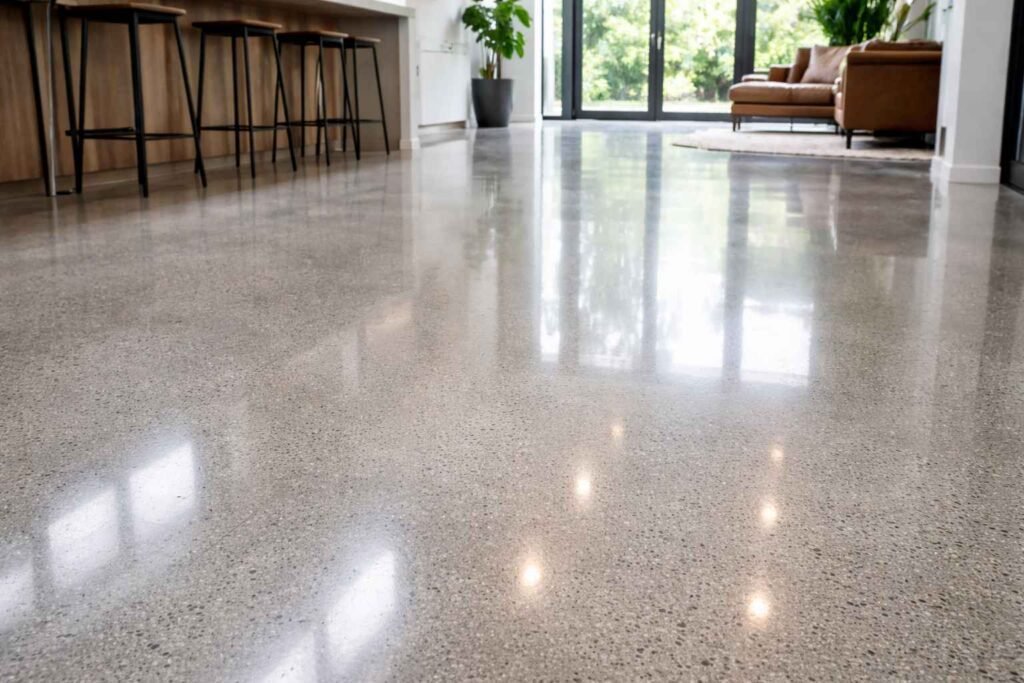
The finished floor can range from a low-sheen matte appearance to a highly reflective polished surface.
Property owners considering this type of flooring can learn more about professional polished concrete flooring options available in Orange County.
What Are the Main Benefits of Polished Concrete Floors?
Durability for High-Traffic Areas
Polished concrete is well suited to spaces that experience regular foot traffic, carts, equipment, vehicles, or other daily use.
This makes it popular in:
- Warehouses
- Manufacturing facilities
- Retail stores
- Garages
- Showrooms
- Restaurants
- Offices
- Commercial buildings
- Residential interiors
The durability of the finished floor depends partly on the quality and condition of the underlying concrete slab. Existing cracks, spalling, pitting, or other damage should be evaluated before polishing begins.
Lower Maintenance Requirements
Polished concrete does not require carpet cleaning, grout cleaning, or routine waxing like some traditional flooring systems.
Routine maintenance generally involves removing dust and abrasive debris and cleaning the floor with an appropriate neutral cleaner.
Keeping grit and dirt off the surface is particularly important because abrasive particles can gradually dull the finish in high-traffic areas.
Long Service Life
A properly installed and maintained polished concrete floor can provide many years of use.
Unlike flooring materials installed over concrete, the slab itself becomes the finished surface. This can reduce the need to remove and replace additional flooring materials later.
Actual lifespan will depend on traffic, maintenance, slab condition, environmental exposure, and how the space is used.
Customizable Appearance
Concrete polishing does not have to create the same appearance on every project.
The final look can vary based on:
- Gloss level
- Aggregate exposure
- Existing concrete characteristics
- Stain color
- Decorative treatments
- Floor condition
Businesses and homeowners looking for additional color and design options can also consider stained and polished concrete.
Improved Light Reflectivity
Higher-gloss polished concrete can reflect both natural and artificial light.
In large commercial and industrial spaces, this may help create a brighter-looking environment and improve overall visibility.
The amount of reflectivity depends on the final polish level, lighting design, concrete characteristics, and surrounding surfaces.
Is Every Concrete Floor Suitable for Polishing?
No.
One of the most important parts of a polished concrete project is evaluating the slab before work begins.
A contractor should inspect the floor for conditions such as:
- Significant cracks
- Uneven sections
- Previous coatings
- Adhesive residue
- Oil or chemical contamination
- Moisture concerns
- Pitting or spalling
- Damaged joints
- Extensive surface deterioration
Some issues can be corrected during surface preparation. Others may affect the final appearance or make a different flooring system more appropriate.
This is one reason an on-site evaluation is more useful than choosing a flooring solution based only on photographs or square footage.
Does Concrete Polishing Repair Cracks?
Polishing itself does not repair structural cracks.
Cracks, holes, joints, and damaged sections may need separate preparation or repair before or during the polishing process.
It is important to discuss existing damage with your contractor before the project begins because repairs can affect both the appearance and performance of the finished floor.
Natural variation should also be expected. Polished concrete often reveals characteristics of the original slab rather than completely hiding them.
What Finish Options Are Available?
Polished concrete can be finished at different levels of sheen and aggregate exposure.
A lower-sheen finish may provide a more understated appearance, while higher polish levels create greater reflectivity.
Grinding can also expose different amounts of aggregate within the slab. Depending on the concrete and project goals, the finished floor may show very little aggregate or expose considerably more stone.
There is no single best finish. The right choice depends on the building, lighting, traffic, design preferences, and intended use of the space.
Can Polished Concrete Be Slippery?
Any hard flooring surface can become slippery when contaminated with water, oil, dust, or other materials.
Slip resistance depends on several factors, including:
- Surface finish
- Cleaning practices
- Contaminants
- Footwear
- Environmental conditions
- Additional treatments
For commercial or industrial spaces, discuss slip-resistance requirements with the contractor before selecting the final finish.
How Much Does Concrete Floor Polishing Cost?
There is no single price per square foot that applies to every project.
Concrete polishing costs can vary based on:
- Total square footage
- Existing slab condition
- Amount of repair required
- Existing coatings or adhesives
- Desired gloss level
- Aggregate exposure
- Staining or decorative work
- Accessibility
- Number of edges and obstacles
- Commercial or residential requirements
A relatively clean open warehouse floor may require different preparation and labor than a smaller space with coatings, cracks, walls, fixtures, and detailed edge work.
For this reason, the most accurate estimate normally comes after evaluating the actual floor.
How to Choose a Concrete Floor Polishing Contractor
Look for Relevant Concrete Flooring Experience
Concrete polishing requires specialized equipment and experience.
Ask whether the contractor regularly works with polished concrete rather than treating it as an occasional add-on service.
Review previous projects that are similar to your property type.
Ask About Surface Preparation
Preparation can have a major effect on the final result.
A qualified contractor should be able to explain how they will address:
- Existing coatings
- Cracks
- Damaged concrete
- Uneven areas
- Adhesives
- Edge work
- Contamination
Be cautious if the proposed process skips directly to polishing without discussing the condition of the existing slab.
Discuss the Desired Finish Before Work Begins
Terms such as “polished,” “shiny,” and “smooth” can mean different things to different people.
Discuss the desired level of sheen, aggregate exposure, color, and overall appearance before the project starts.
Photos of previous projects can help establish expectations.
Confirm Insurance and Project Details
Before hiring a contractor, confirm appropriate insurance coverage and make sure the estimate clearly explains the scope of work.
A useful proposal should identify what preparation, repairs, polishing, staining, or other treatments are included.
How Should Polished Concrete Be Maintained?
Polished concrete is relatively easy to maintain, but it is not maintenance-free.
Good practices include:
- Remove dust and abrasive debris regularly
- Clean spills promptly
- Use appropriate neutral floor cleaners
- Avoid harsh chemicals unless approved for the surface
- Use protective pads beneath furniture where needed
- Follow the contractor’s maintenance recommendations
- Periodically evaluate high-traffic areas for wear
Maintenance requirements vary depending on whether the floor is in a home, showroom, warehouse, restaurant, garage, or industrial facility.
Is Polished Concrete a Good Choice for Orange County Properties?
Polished concrete can be a strong option for many Southern California properties because it works in both residential and demanding commercial environments.
Orange County properties commonly use polished concrete in garages, warehouses, retail spaces, offices, restaurants, showrooms, industrial buildings, and modern residential interiors.
Concrete Solutions provides concrete flooring services throughout Orange County and works with existing slabs to determine whether polishing, staining, repair, leveling, or another flooring solution is appropriate.
Frequently Asked Questions About Concrete Floor Polishing
How Long Does Concrete Floor Polishing Take?
Project length depends on square footage, floor condition, repairs, desired finish, and whether existing coatings need to be removed. Smaller uncomplicated floors may be completed relatively quickly, while larger commercial projects or heavily damaged floors require more preparation.
Can Existing Concrete Be Polished?
Often, yes. Existing slabs are commonly polished, but the concrete must first be evaluated for damage, coatings, contamination, moisture issues, and other conditions that could affect the project.
Can You Change the Color of Polished Concrete?
Yes. Concrete stains and other decorative techniques can add color while preserving the durability and appearance of polished concrete.
Is Polished Concrete Good for Warehouses?
Yes. Polished concrete is commonly used in warehouses because it provides a durable surface that can withstand substantial traffic while remaining relatively easy to maintain.
Is Polished Concrete Suitable for Homes?
Yes. Polished concrete can work well in contemporary homes, garages, basements, living spaces, and other areas where homeowners want a durable hard-surface floor.
Get a Professional Concrete Floor Evaluation
The quality of a polished concrete floor depends heavily on the condition of the slab, proper surface preparation, and selecting the right polishing process for the space.
If you are considering polished concrete for a home, warehouse, commercial property, garage, retail space, or industrial facility in Orange County, contact Concrete Solutions to discuss your floor and request an estimate.
