

Concrete floors are durable, but they are not immune to damage. Cracks, pitting, spalling, uneven sections, worn joints, and surface deterioration can develop in residential, commercial, warehouse, and industrial properties throughout Orange County.
Some problems are mainly cosmetic. Others can interfere with equipment, flooring installation, cleaning, safety, or the long-term performance of the slab.
The first step is identifying what caused the damage. From there, a contractor can determine whether the floor needs crack repair, patching, grinding, resurfacing, leveling, joint repair, or another solution.
What Causes Concrete Floor Damage?
Concrete can deteriorate for many reasons, including:
- Normal shrinkage
- Building movement
- Soil settlement
- Heavy equipment or vehicle loads
- Impact damage
- Moisture exposure
- Chemical exposure
- Surface abrasion
- Improper installation
- Failed coatings
- Damaged joints
- Inadequate surface preparation
Two cracks that look similar may require different approaches if they formed for different reasons.
That is why professional concrete floor repair should begin with an evaluation of the slab rather than simply filling every visible crack.
Common Concrete Floor Problems
Cracks
Cracks are among the most common issues found in concrete.
They can develop because of concrete shrinkage, movement, settlement, loading, or other conditions.
When evaluating a crack, contractors may consider:
- Width
- Depth
- Location
- Whether it is moving
- Surrounding floor condition
- Intended use of the space
Filling a crack without understanding why it developed may only address the visible symptom.
Spalling
Spalling occurs when pieces of the concrete surface begin to flake, chip, or break away.
Damage can range from shallow surface deterioration to larger areas of weakened concrete.
Repair often involves removing loose or unsound material and rebuilding the damaged section with an appropriate repair product.
Pitting
Pitting creates small holes or depressions across the concrete surface.
Minor pitting may mainly affect appearance, while widespread deterioration can make cleaning difficult or interfere with polishing and other flooring systems.
Uneven Concrete
Concrete floors can become uneven because of settlement, installation issues, damage, or differences in the original slab elevation.
Possible solutions depend on the problem.
High areas may sometimes be corrected through grinding, while low sections may require patching or leveling.
For certain flooring preparation projects, self-leveling concrete may be used to create a smoother and more consistent substrate.
Damaged Concrete Joints
Joints are intentionally installed in concrete to accommodate movement.
In warehouses and commercial environments, repeated forklift, cart, pallet, or equipment traffic can damage the edges surrounding these joints.
Damaged joints can continue deteriorating if the edges repeatedly receive heavy impact.
Surface Stains and Contamination
Oil, chemicals, adhesives, coatings, paint, and other contaminants can affect both appearance and future flooring work.
Contamination may need to be removed before the slab can be repaired, polished, coated, or refinished.
Why Is Early Concrete Floor Repair Important?
Concrete damage does not always require emergency work, but ignoring deterioration can sometimes allow the problem to become more extensive.
Early repair may help:
- Prevent additional surface deterioration
- Reduce tripping or operational hazards
- Protect joint edges
- Prepare the floor for refinishing
- Improve appearance
- Extend the useful life of the existing slab
- Reduce the amount of future repair work
The sooner the cause is identified, the more options a property owner may have.
How Are Concrete Floors Repaired?
There is no universal repair method.
A contractor should select the repair process based on the type of damage, condition of the slab, and how the property will be used.
Crack Repair
Cracks may be cleaned and filled or treated with specialized repair materials.
The appropriate product depends on whether the crack is stable, how wide it is, expected traffic, and what flooring system will eventually be installed.
A repair in a decorative residential floor may require different considerations than one in a warehouse receiving forklift traffic.
Concrete Patching
Patching is commonly used when sections of concrete have chipped, broken, or deteriorated.
Loose material generally needs to be removed first so the repair can bond to sound concrete.
The size and depth of the damaged area determine which repair materials and preparation methods are appropriate.
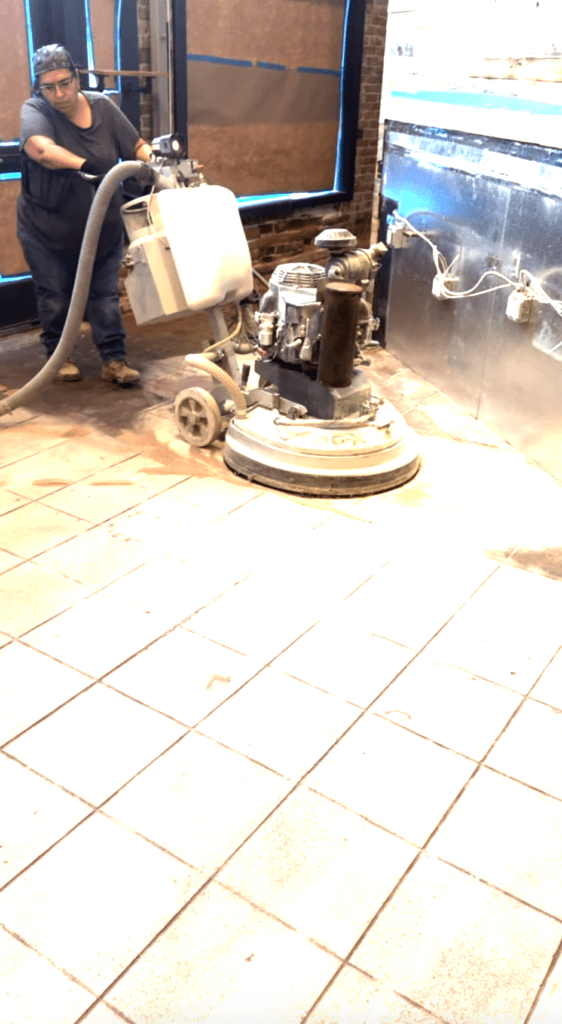
Concrete Grinding
Grinding can remove surface material using diamond tooling.
It may be used to:
- Remove old coatings
- Remove adhesives
- Correct some high spots
- Prepare concrete for polishing
- Improve certain surface irregularities
- Remove weak surface material
Grinding cannot fix every concrete problem. Significant settlement or continuing slab movement may require further investigation.
Concrete Resurfacing
Resurfacing may be considered when damage extends across a larger portion of the floor.
Rather than addressing dozens of individual surface defects, an appropriate resurfacing system may create a more consistent surface.
The existing slab still needs to be structurally suitable for the system being installed.
Joint Repair
Damaged joint edges can sometimes be rebuilt and the joint refilled using products designed for the environment.
Joint repair is particularly important in industrial and warehouse settings where wheels repeatedly cross the same areas.
Repair Before Polishing Concrete
Repair is often part of the preparation process for polished concrete flooring.
Before polishing begins, contractors may need to address:
- Cracks
- Pits
- Damaged joints
- Surface deterioration
- Previous coatings
- Adhesives
- Contamination
Repairs may remain visible after polishing. This is not necessarily a defect.
Polished concrete often reveals the history and natural variation of the original slab rather than hiding every characteristic.
Can Cracked Concrete Still Be Polished?
Yes, in many cases.
A cracked floor does not automatically need to be replaced.
The contractor should determine whether the cracks are stable and whether they can be appropriately treated before polishing.
Some repaired cracks remain visible in the final floor and may become part of its appearance.
Polishing itself does not repair structural movement.
Can Uneven Concrete Be Repaired?
Often, but the correct method depends on the type and severity of the unevenness.
Possible approaches include:
- Grinding high areas
- Filling localized low sections
- Patching
- Self-leveling products
- Resurfacing
If an entire slab has settled or moved significantly, simply grinding or covering the surface may not address the underlying issue.
Concrete Floor Repair for Warehouses
Warehouse floors face particularly demanding conditions.
Typical sources of wear include:
- Forklifts
- Pallet jacks
- Heavy machinery
- Repeated joint crossings
- Impact
- Abrasion
- Chemical spills
- High traffic
Repairs need to account for both durability and operational downtime.
The contractor should understand how the floor is used before selecting repair materials or recommending a finished surface.
Concrete Floor Repair for Commercial Properties
Retail stores, restaurants, showrooms, offices, and commercial buildings can develop concrete damage from traffic, previous flooring installations, equipment, remodeling, or normal wear.
Appearance may also be more important in public-facing commercial areas.
Repair planning should therefore consider what the finished floor will eventually look like, especially when the concrete will be polished or stained.
Concrete Floor Repair for Homes and Garages
Common residential concrete problems include:
- Garage floor cracks
- Pitting
- Stains
- Uneven sections
- Surface wear
- Old coatings
- Damage discovered during renovations
Homeowners who intend to expose, polish, or stain the existing slab should have repairs evaluated before choosing the final decorative finish.
Should You Repair or Replace a Concrete Floor?
Complete replacement is not always necessary.
Repair may make sense when:
- Most of the slab remains sound
- Damage is limited to specific sections
- Cracks can be appropriately treated
- Surface deterioration can be removed
- The floor can be prepared for its intended use
Replacement or more extensive work may be necessary when there is widespread deterioration, severe settlement, major structural damage, or another underlying condition that cannot be solved through surface repair alone.
How Much Does Concrete Floor Repair Cost?
Concrete repair costs vary considerably.
Pricing can depend on:
- Size of the damaged area
- Depth of damage
- Type of repair
- Amount of surface preparation
- Coating or adhesive removal
- Crack quantity
- Joint damage
- Accessibility
- Floor use
- Desired finished appearance
A small isolated repair may require a very different scope than restoring thousands of square feet of warehouse concrete.
An on-site inspection is usually the best way to establish an accurate repair plan and estimate.
How to Choose a Concrete Repair Contractor in Orange County
Look for Concrete Flooring Experience
Choose a contractor with experience repairing the type of floor you have.
Commercial and industrial projects can require different equipment and materials than residential work.
Ask What Caused the Damage
A contractor should be interested in why the floor failed, not just how to cover the visible problem.
Ask About Surface Preparation
Preparation strongly affects repair performance.
Ask what loose material, coatings, contaminants, or damaged concrete must be removed before repairs begin.
Explain Your Plans for the Floor
Tell the contractor whether the floor will eventually be polished, stained, coated, or covered with another flooring material.
The intended finish may affect the repair approach.
Review the Entire Scope
Do not compare estimates based solely on price.
Look at what each estimate includes for:
- Preparation
- Repairs
- Grinding
- Joint work
- Materials
- Finishing
- Cleanup
Concrete Solutions provides concrete flooring services throughout Orange County for homes, garages, businesses, warehouses, and industrial properties.
Frequently Asked Questions About Concrete Floor Repair
Can Concrete Cracks Be Permanently Repaired?
Many cracks can be successfully treated, but no contractor should assume every crack will behave the same way. Continuing movement can cause a repaired area to reopen or develop additional cracking.
Can You Repair Concrete Without Replacing the Entire Floor?
Yes. Many concrete floors can be repaired, resurfaced, ground, or refinished without complete slab replacement.
Will Concrete Repairs Match the Existing Floor?
Not always.
New repair materials may differ in color or texture from older concrete. These differences can become more noticeable when concrete is polished or stained.
Does Concrete Polishing Repair Damage?
No. Polishing improves and refines the surface, but cracks, pits, deteriorated concrete, and other damage may need separate repair.
Is a Crack Always a Structural Problem?
No. Some concrete cracks result from normal shrinkage or other non-structural conditions. However, unusual, widening, displaced, or actively moving cracks should be properly evaluated.
How Quickly Can a Concrete Floor Be Used After Repair?
Return-to-service times depend on the repair material, depth, environmental conditions, and amount of traffic the floor will receive. Contractors should follow the specifications for the products used.
Get an Orange County Concrete Floor Evaluation
Cracks, pitting, spalling, uneven areas, and damaged joints do not automatically mean an entire concrete floor needs replacement.
The right approach starts with evaluating the existing slab and identifying what caused the damage.
Concrete Solutions provides concrete repair, grinding, polishing, leveling, and other flooring services for residential, commercial, warehouse, and industrial properties throughout Orange County.
If you have a damaged concrete floor and want to understand your repair options, contact Concrete Solutions to request an evaluation and estimate.
